
Home > Installation Support – Catering
Installation Support Centre - Catering Equipment
We created this support centre to provide guidance on how to prepare for the installation so it goes as smoothly as possible.
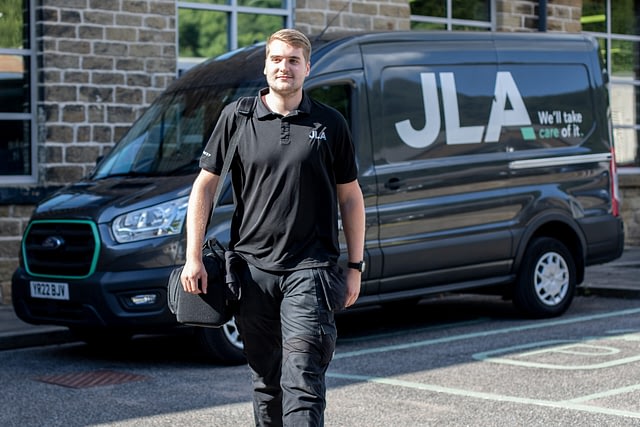
Thank you for choosing JLA
The Installation Support Centre helps you to prepare your site ready for JLA engineers. This will allow us to install your equipment effectively and in a timely manner so you can get your new kitchen up and running smoothly.
Pre-installation guidelines
We have created pre-installation guidelines and checklists to help ensure the installation of your JLA commercial catering equipment is a success. Please review the following information so your kitchen is ready for the JLA engineers.
Location

This section provides guidance on selecting the most suitable location for installing catering equipment within your premises. The checklist covers key considerations including ground-floor accessibility, external wall ducting, visual impact, and ease of access to the machines.
If the premises has never included a commercial kitchen, it is important to factor in the potential need for planning permission, as obtaining approval can be a time-consuming process.
Ideally the kitchen should be situated on the ground floor to facilitate easy machine access and goods in.
The chosen site should ideally consist of at least one external wall to receive extract and fresh air ductwork without the need for expensive ductwork runs.
Is there an existing extract canopy or hood? This is essential for a commercial kitchen in order to remove heat, smoke, grease, and airborne particles from your cooking environment. They are also required to keep compliant with health and safety regulations in the UK.
Consideration should be given to machine and equipment access. It is important to note that machines may need to be swapped, replaced or upgraded long after the completion of the building.
Basement kitchens should generally be avoided, as they pose significant challenges. Restricted access for equipment, along with the complexity and high cost of installing foul drainage, extract ductwork, and make-up air systems, mean basements are impractical for most commercial kitchen setups.
Please note: If a basement kitchen is unavoidable, LPG should never be used.
When planning a kitchen, it is best to keep work areas separated wherever possible. For example, washing up, preparation, cooking, service and food storage.
Fixing and mounting

This section outlines considerations with fixing and mounting certain equipment, such as wall-mounted commercial grills and kitchen furniture.
Will any equipment, such as salamander grills, be wall-mounted? Due to their weight, these units require a solid wall for safe and secure installation.
Services

To help prepare your kitchen, this section outlines essential services and utilities, such as drainage, ducting, water, gas, electricity and waste pipes.
Installation of your Total Care equipment is included when connecting to services located within 1.5 meters of the commercial kitchen. In certain cases, JLA can extend services beyond this distance; however, any additional work typically falls outside the agreed Total Care package and will require an upfront payment. A full scope assessment by our installation experts will confirm any extra costs before proceeding.
A waste pipe of at least 50mm diameter should be situated in the wash up area of the kitchen. Also, if a combi oven is to be installed, waste pipework should be situated in that area.
Ideally, the kitchen should be equipped with a three-phase electrical supply, as a typical commercial kitchen may require around 100 amps on a 3-phase connection.
While operation on a single-phase supply is possible and we are able to work around this challenge, it can restrict the size and specification of the equipment that can be installed.
Hot and cold water supplies should be capable of providing up to 24 litres per minute at a minimum pressure of 1.5 bar under normal conditions. These requirements may vary depending on the quantity and type of equipment in use.
Gas should be sized according to the types of machines employed, the distance carried, route configuration and other draws from the source point. A gas interlock system with an electronic shut off valve must be provided in an accessible location.
The extract duct discharging to atmosphere is completely safe, however, it may carry some odours. Consideration should be given to minimise any potential impact on neighbouring properties.
Advice and insights
If you’re seeking general guidance to help keep your kitchen safe, compliant, efficient and operating smoothly, explore the free resources below.
Knowledge Hub
Whether it’s a simple question or an issue you need addressing quickly our team are here 24/7.
Energy SMART Hub
Whatever your business needs, we have a solution. Get advice from the experts today.
Blogs & Articles
Book an emergency engineer or arrange planned servicing and maintenance.
Our installations expert
George joined JLA as an apprentice service engineer in 2011. With years of experience in plumbing, engineering, electrical and mechanical engineering, he oversees the delivery of safe, compliant installations.