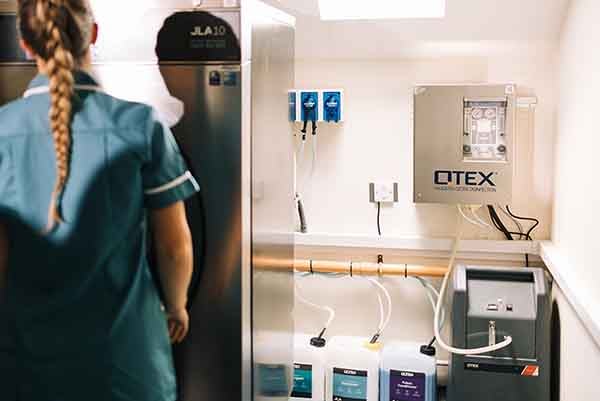

Protect your residents and microfibre investments
Hospitals and healthcare are increasingly employing microfibre mops and cloths for cleaning and infection control.
Doing so is a significant investment and should be encouraged, but switching without due regard to maintenance will put that investment at risk and so utilising the right wash process is imperative.
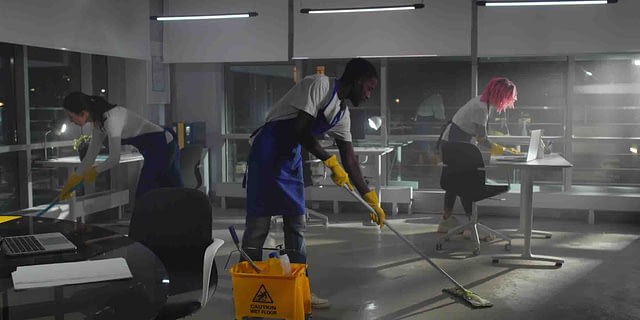
Traditional microfibre laundering - thermal disinfection
Microfibre suppliers generally recommend that a wash temperature of between 60°C and 95°C is needed to launder their products after each use and maintain efficacy. Due to the high effectiveness of microfibre in picking up micro-organisms from surfaces it should always be considered as infected linen and therefore thermal disinfection is often seen as the only means of decontamination – whether processing laundry inhouse or outsourcing it to a third party.
Wherever it is laundered though, thermal disinfection should not be seen as the only go-to solution to decontamination. Disinfection cannot be guaranteed (spore-forming such as C. Difficile and some heat-resistant bacteria E.Coli for example, cannot be fully eradicated using this method) and as for the impact, too much heat during laundering can destroy microfibres.
Microfibres are essentially plastics, blends of polyamide and polyester; heat is not good news for plastics and can reduce their effectiveness. Shrinkage occurs, with fibres becoming damaged and twisted, trapping bacteria and reducing the effectiveness of the decontamination process and ongoing performance of the material.
New microfibre versus thermally processed
Healthcare professionals have questioned the use of microfibres in the past due to concerns over the inability to decontaminate them effectively.
In an article published in Journal of Hospital Infections in 20091 it was stated that “Microfibre products cannot tolerate repeated exposure to chlorine based products. This complicates decontamination, since Clostridium difficile spores become embedded within microfibre and cannot be removed by routine laundering. “This has led to an increased focus on the use of disposables with higher costs to maintain buildings and also a heavy reliance on land fill.
Whilst microfibre manufacturers have provided guarantees of up to 500 washes – published work from the Department of Health in conjunction with Campden BRI2 concluded that microfibre performance following thermal disinfection wash process affected the long term performance. The report concluded that “After repeated washing, re-usable cloth performance improved at 75 washes, and reduced after 150 washes.”
The future of microfibre laundry - low temperature ozone disinfection
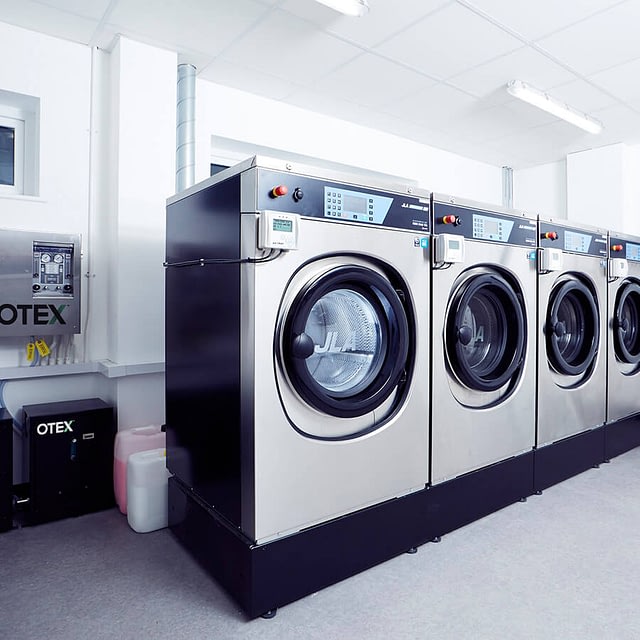
OTEX ozone laundry disinfection system. In contrast to traditional thermal processes, low temperature ozone laundering offers the dual benefit of being tough on bacteria while being gentle on fibres. In a peer reviewed report published in the Journal of Infection Prevention3 in 2012 by P.N. Humphreys et al at Huddersfield University stated:
“The data supports the position that JLA’s OTEX system is an effective approach for the re-cycling of MF cloths without any detrimental impacts on MF performance up to 350 OTEX cycles”.
OTEX was developed at JLA in 2004 and was acknowledged under the Department of Health/NHS Rapid Review panel in 20094. End users can access the reports submitted to the RRP via: www.jla.com/pasa
After considerable development work a unique wash process was developed and trialled with the support of the NHS and ISS Mediclean at the QE2 Hospital, Welwyn Garden City. After microbiological analysis of mops and cloths over a six month period, no pathogenic bacteria was found to be present in any of the post wash mops and cloths, demonstrating an extremely effective disinfection process even in cold water. As there is no need for hot water both water and electricity is reduced significantly.
The energy to heat to thermal temperatures and provide the necessary hold time is also not required. As such, ozone decreases the overall carbon footprint of the wash process and maintains the integrity of the microfibre.
In the most green-focused commercial environments, cold is the new hot – and OTEX is therefore (almost literally) a breath of fresh air. Those seeking to meet Government targets by cutting running costs and meeting environmental standards are becoming open to a new order in disinfection, realising that investment in microfibre and investment in the best way to wash them should not be mutually exclusive.
The latest study for OTEX has taken place with De Montfort University5 and following in depth testing, it has been proven that the OTEX laundry system removes all traces of Coronavirus. For any site where infection control is vital, understanding that microfibres, as well as textiles such as bedding, linen and even uniforms can be washed using a low temperature yet completely removes all traces of the virus is a reassurance more important than ever. Find out more at:
www.jla.com/blog/hygiene/ozone-vs-coronavirus
Out with outsourcing
Few commercial laundries can offer the ultra hygienic ozone process, which means outsourcing laundry and your valuable microfibre assets is always a risk. Every time you send a load off-site, you relinquish quality control and cannot be sure that the bundle you receive days later has been disinfected. That bundle may also be short, damaged or late – and all of the above in the worst cases.
It should also be understood that any running costs you might escape by outsourcing will be off-set by those incurred in administering purchase orders, complaints, deliveries and storage – and you’ll also have to invest in more mops and cloths in order to have enough cleaning items on-site while a dirty load is being worked on.
The logistics of transporting infectious mops and cloths shouldn’t be taken lightly. Are systems in place to ensure that clean and dirty linen are not stored together? What decontamination procedures are in place, if any for the vehicle transporting your items and those from other establishments?
Compliance
The introduction of the Department of Health HTM01-04 Decontamination Guidelines or Healthcare Linen has heightened the focus on hospital laundry procedures where disinfection is essential. In addition, as antibiotic availability (due to growing resistance) becomes more restricted, infection control and NHS Trusts are taking a different direction.
The role of the laundry is increasingly becoming the focus of attention and rightly so. This is seen as part of the infection control process potentially elevating the status close to medical devices.
HTM01-04 places considerable responsibility on the end user of the laundry to carry out regular checks on the equipment and process.
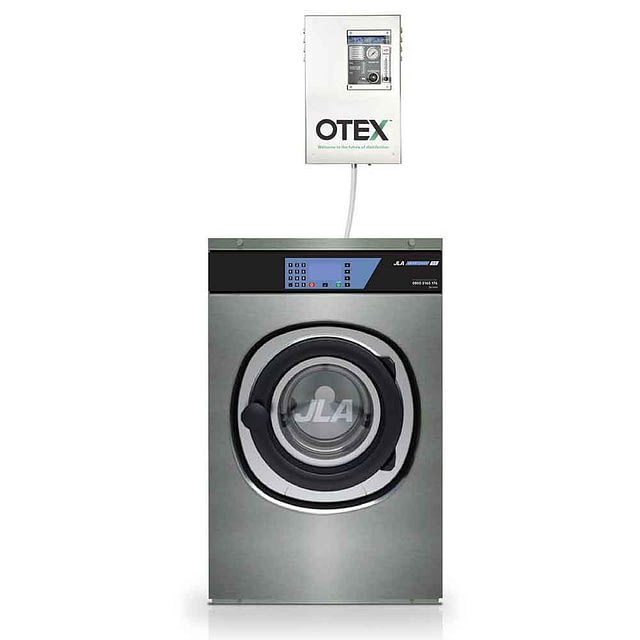
A laundry policy should be in place and all staff operating the equipment should be suitably trained and competent. The disinfection process can include chemical disinfection as well as thermal. It’s important that any chemical disinfection process is validated prior to introduction on site and should be able to prove that the disinfection efficacy is equal to or better than thermal disinfection.
Part of this protocol is the annual disinfection tests which should be carried out if you are adopting chemical disinfection. With this in mind together with the validation exercise which was conducted during the submission to the DOH/NHS Rapid Review Panel – JLA has contracted an NHS
Authorising Engineer (Decontamination) to assess the OTEX system in relation to compliance to HTM01-04 where it was found to fully meet the requirements. A full report demonstrating compliance to the guideline was issued in 2018. Copy available on request.
Prevention is better than cure
Making the wrong laundry choices could have financial implications, in that failing to protect your investment may force you to buy replacement stock more regularly than you might have hoped. And of course, in healthcare settings, leaving wards open to cross-infection can have more severe consequences where patient outcomes are concerned.
Making the right call now can spare you these headaches later. As is the case when choosing microfibre products themselves – which should be proven as effective in cleaning all environments – the commercial laundry system you intend to use should come with solid credentials, of which OTEX carries plenty.
As for documented savings versus traditional thermal laundry, The DoH went on to calculate that the annual water and energy cost savings of £2,916.69 were confirmed (a utility savings of 36%), during tests carried out at Southampton Showcase Hospital in 20116.
Of course, as energy prices continue to rise, savings will increase. A greater emphasis on reducing the impact on the environment is growing with increased focus from potential clients during the tender processes. Whilst utility savings with OTEX are recognised the impact on the environment from the waste stream might not be top of the list.
But ozone quickly degrades back to oxygen so whilst other chemical disinfectants may persist and impact on aquatic life, ozone doesn’t scavenge oxygen and doesn’t require additional water treatment. The reduction in the amount of detergent needed for the process is also significantly reduced with additional environmental benefits.
OTEX was developed at JLA in 2004 and is acknowledged under the Department of Health/ NHS Rapid Review Panel (R1)
Maximising compliance
The validated OTEX system meets this requirement with real time monitoring after every cycle, printed receipts providing an audit trail to prove that full decontamination has been achieved. It also now includes the facility to store the data with ease of access for historical disinfection cycles.
This has also been extended to include health and safety data on ambient ozone levels within the laundry room for staff reassurance. Outsourcing or using thermal methods cannot always offer this real-time reassurance, and may leave wards open to higher risks of cross-contamination. In addition, OTEX programmes all ensure disinfection takes place, whereas thermal alternatives are open to user error – specific customised programmes would need to be created to prevent staff using ‘standard’ cycles, which could be costly in both financial and hygienic terms.
On this particular front, outsourcing carries the biggest risk. Once laundry leaves your site, will your laundry adhere to Department of Health Guidelines – or prove that they do so? Regardless, opting for on-premise puts you in control, and allows you to watch over your microfibre for the years it will serve you thanks to ozone disinfection.
Technology’s role in professional cleaning should not be underestimated. Even though more managers are indeed turning to microfibre, there’s a danger that they might overlook the decontamination process needed to ensure hygienic laundering.
Since the main route for outbreaks of E.Coli, C.Difficile, Norovirus, MRSA and other infections is hand-to-mouth, it clearly becomes a problem if surfaces are being cleaned by unclean cloths and mops. This can be made worse through the transmission of germs from the cleaner’s hand onto clean surfaces or materials after they have handled inadequately laundered items.Lucy Cripwell, JLA Chemist

For more expert insights, visit the JLA Knowledge Hub.
Similar articles you may like
Is used or refurbished commercial laundry equipment worth it?