

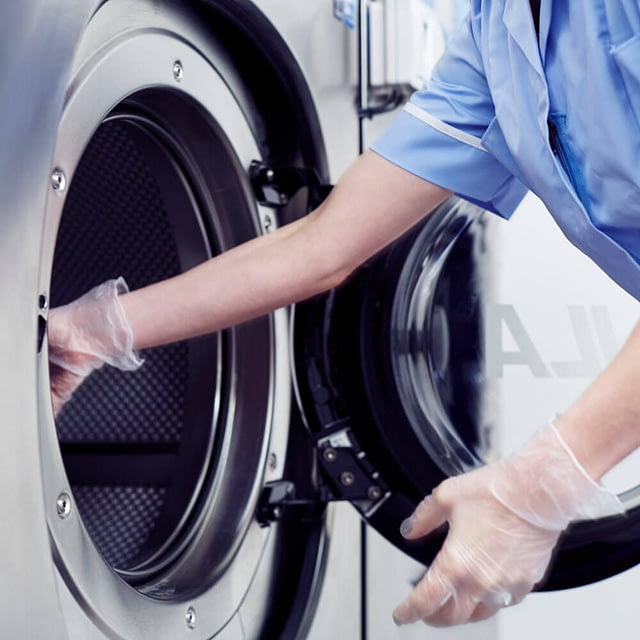

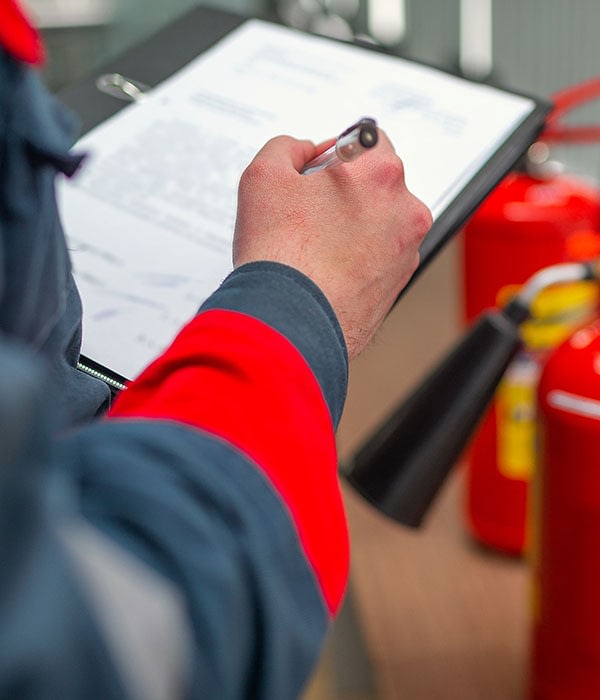

It might seem obvious, but at JLA we have observed many laundry rooms that are not always hygienic or clean. Maintaining high standards of cleanliness is not just about appearances, but it is crucial for safety, operational efficiency, and infection control.
Laundry rooms should be kept clean in every area, including the inside of machines such as drums, doors, and detergent dispensers, as well as ductwork and lint trays.
The wider space, including sorting areas, floors, doors and laundry carts/baskets also need regular attention to ensure a safe and hygienic environment.
One of the most serious risks in laundry rooms is fire caused by lint build-up from commercial tumble dryers. Lint is highly flammable and can accumulate before restricting air flow. It can cause dryers to overheat, creating a risk of ignition.
There are many different regulations for maintaining clean ductwork in laundry rooms, therefore regular commercial duct cleans from a professional is always recommended.
The Health & Safety at Work Act 1974 imposes a duty of care to protect staff and visitors from hazards such as fire and poor air quality. The Workplace (Health, Safety and Welfare) Regulations 1992 mandate proper ventilation with clean air, while COSHH regulations require control of exposure to hazardous substances like dust and mould.
Additionally, the TR19® standard sets best practices for maintaining clean ventilation systems. Failure to comply with these regulations can lead to fines, prosecution, and liability for injury or illness.
The condition of your machines can direct impact performance. When commercial laundry equipment is dirty or clogged with dust, it may not have the same cleaning performance, which may even lead to the way re-washing of clothing and garments.
Build-up inside the system can also lead to detergent blockages and unnecessary strain on components, which could cause breakdowns in the long-term.
By keeping machines clean along with preventative maintenance and regular servicing, you ensure they operate efficiently, deliver consistently high-quality results, and remain reliable.
In settings such as healthcare and social care, hygiene is essential. Laundry rooms must be very hygienic to prevent cross-contamination and maintain infection control standards.
This includes separating ‘soiled’ and ‘clean’ zones and regularly disinfecting machines and surfaces to protect vulnerable individuals.
Launderettes and communal laundry facilities in accommodation settings require extra attention because they are open to the public. It is important to educate users with clear instructions and posters on how to use machines and keep them in good condition.
Frequent checks and regular cleaning are essential, especially in high-volume areas such as student housing.
Cleanliness in laundry is a vital part of ensuring safety, compliance, operational performance, and health. By maintaining high standards and following best practices, you can protect your staff, customers, residents and contractors.
If you need any assistance or advice with duct cleaning, preventative maintenance or compliance, contact the team at JLA today.
For more expert insights, visit the JLA Knowledge Hub.
Giovanna has worked at JLA for six years and has a wide range of experience working with our laundry and catering customers to help them keep compliant.
Her day-to-day role includes advising customers what action is required to maintain compliance with current legislation and regulations.
Whether it is commercial canopy maintenance in accordance with TR19 standards or gas-safety checks to keep your boiler rooms, kitchens and equipment safe, Giovanna has a wealth of expertise, advice and tips for businesses across the UK.
By clicking Get my quote, you agree to the Terms and Conditions set out by this site, including our Privacy Policy
By clicking Get my quote, you agree to the Terms and Conditions set out by this site, including our Privacy Policy
Your critical equipment is just that – critical. So whether you need advice on how we can help with new solutions and servicing, booking an engineer or you want to talk to us about your account, get in touch below.
Book an emergency engineer or arrange planned servicing and maintenance.
Whatever your business needs, we have a solution. Get advice from the experts today.
Whether it’s a simple question or an issue you need addressing quickly our team are here 24/7.